





Centralized Storage Architecture

Predictable Operations and Lifecycle Management

Vendor lifecycle support

Centralized controllers

Predictable performance
Shared access protocols
How SAN NAS Works
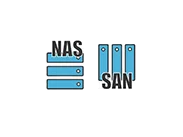
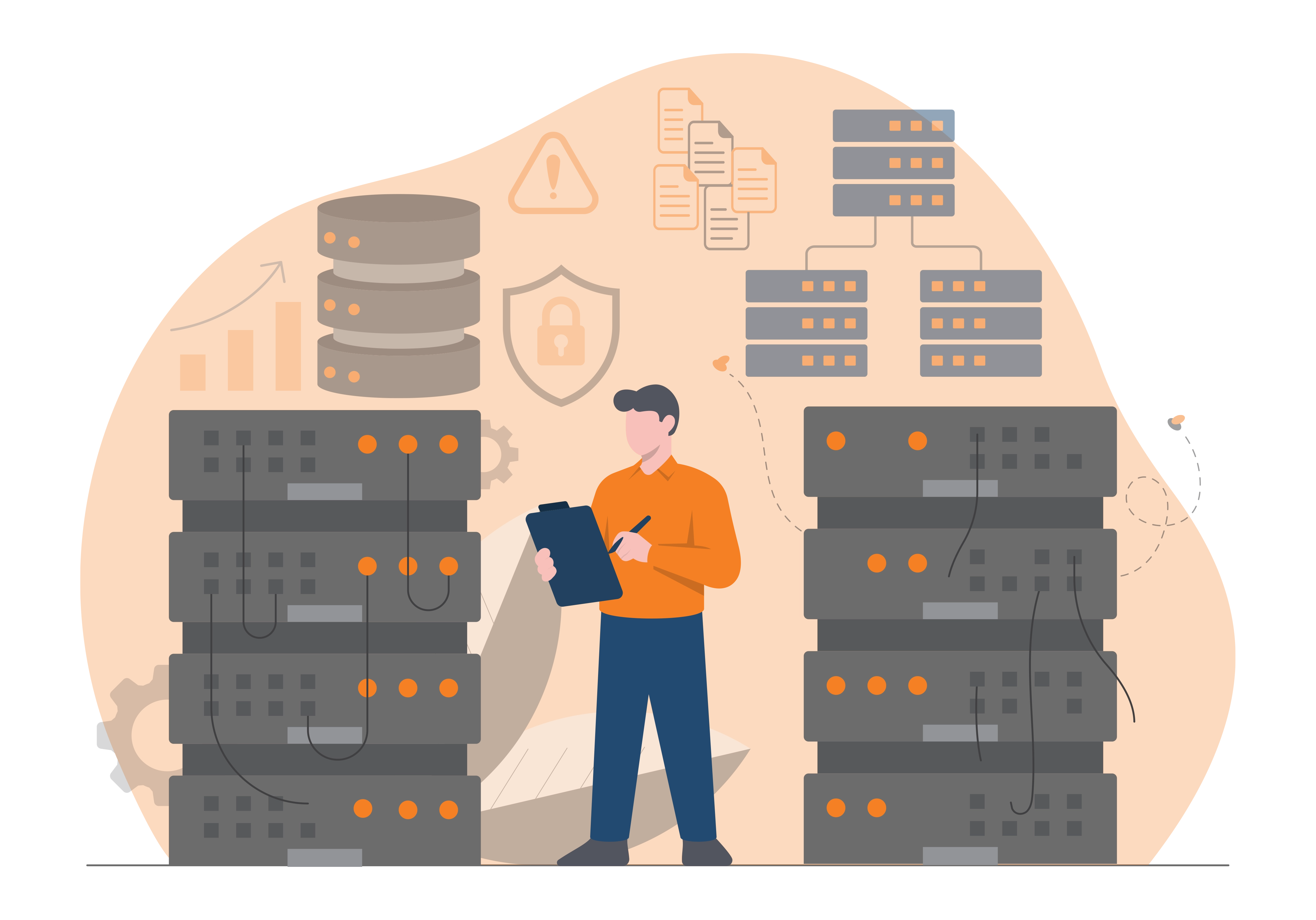
SAN and NAS systems provide shared storage through centralized controllers that manage disk access, caching, redundancy, and client connectivity. SAN exposes block devices to servers, while NAS presents file-based access over the network, each optimized for different access patterns.
Typical approaches include:
- Dual-controller architectures for high availability
- Dedicated tiers for performance-sensitive workloads
- Vendor-managed replication and snapshot features
The key is selecting controller architecture, protocol, and disk layout that align with workload requirements and operational expectations. Performance characteristics, failure behavior, and scaling limits are largely defined by the hardware platform and vendor design choices.
SAN NAS Fit Check By Use Case
Shared Enterprise Infrastructure Storage
SAN and NAS work well where multiple systems require stable shared storage with predictable behavior.
Examples: Virtualization platforms, enterprise application clusters
Regulated and Risk-Averse Environments
Vendor-backed support and well-defined operational models align with compliance-driven organizations.
Examples: Financial systems, regulated industries
Rapidly Growing Data Volumes
Scaling is possible but often requires hardware expansion or controller upgrades.
Examples: Growing datasets, expanding enterprise services
Mixed Workload Environments
SAN and NAS platforms can support mixed workloads, but flexibility depends on available vendor features, controller capabilities, and tiering options rather than dynamic reconfiguration.
Examples: General-purpose enterprise storage, shared infrastructure platforms
Commodity Hardware Scaling Models
SAN and NAS systems are not designed for horizontal scaling using commodity servers. Growth typically requires vendor-specific hardware expansion rather than incremental node additions.
Examples: Cloud-native platforms, scale-out infrastructure environments
Highly Customized Storage Behavior
Deep customization of storage behavior is constrained by vendor architecture, firmware, and management tooling, limiting adaptability for specialized or non-standard requirements.
Examples: Experimental workloads, highly specialized storage use cases

Controller-Centric Storage Architecture
SAN and NAS systems rely on centralized controllers to manage access, caching, and redundancy. This architecture provides consistent behavior and well-defined performance characteristics that align with traditional enterprise storage expectations.
Because controllers sit at the center of all I/O, design choices around controller count, cache configuration, and protocol selection strongly influence scalability and failure behavior. These systems favor predictability over architectural flexibility.

Vendor-Governed Operations and Lifecycle
SAN and NAS platforms are operated within vendor-defined lifecycles that govern firmware updates, expansion options, and supported configurations. This simplifies planning but limits the ability to deviate from supported paths.
They perform best when integrated into environments with strict change control, scheduled maintenance windows, and long-term planning horizons. Attempting to use SAN or NAS systems for rapid experimentation or frequent architectural change often introduces cost and operational friction.
How Crafty Penguins Uses SAN/NAS
SAN and NAS systems are used where operational predictability, controlled change, and vendor-backed support are the primary requirements. They are applied in environments where storage behavior must be well understood, repeatable, and aligned with established enterprise processes rather than optimized for rapid experimentation or architectural flexibility.
Design focuses on controller redundancy, capacity headroom, and upgrade paths that align with vendor-supported lifecycles. Disk tiers, cache behavior, and access protocols are selected based on known workload patterns. Integration follows established enterprise workflows, including identity management, backup systems, and change control processes.
Operations prioritize firmware and software lifecycle management, continuous performance monitoring, and regular validation of failure scenarios. Maintenance activities are coordinated with vendor guidance and support agreements. Lifecycle planning includes controller refresh timing, expansion planning, and periodic review of platform limitations as business requirements evolve.
Don't Take Our Word For It



Clint Bounds
Crafty Penguins also developed a robust deployment process with seamless rollback capabilities, while DigitalOcean provides a dependable infrastructure backbone. In over two years since the migration, Plan to Eat has not experienced a single major outage — a marked improvement over previous AWS operations.
“There’s no single point of failure,” Clint notes. “When large companies on AWS face issues, our website keeps running smoothly — and that feels great.”


Patrick Laberge
They’ve transformed our computing infrastructure from a constant source of stress to a pillar of reliability.

Clifford Long
I was impressed by how seamlessly they managed our infrastructure, monitored systems, and guided our migration to AWS.
What stood out most was their culture fit and shared values—they felt like part of our team rather than an outside vendor. Always responsive, professional, and personable, Crafty Penguins helped us move smoothly through a major transition and set us up for scalable success.

Paul Schloeder
“Where things stand today at 1WorldSync, from an infrastructure perspective, are night and day from where they were when I first started. One cannot measure the stability and peace of mind that CraftyPenguins has brought to 1WorldSync.”
Clint Bounds
Crafty Penguins also developed a robust deployment process with seamless rollback capabilities, while DigitalOcean provides a dependable infrastructure backbone. In over two years since the migration, Plan to Eat has not experienced a single major outage — a marked improvement over previous AWS operations.
“There’s no single point of failure,” Clint notes. “When large companies on AWS face issues, our website keeps running smoothly — and that feels great.”
Patrick Laberge
They’ve transformed our computing infrastructure from a constant source of stress to a pillar of reliability.
Clifford Long
I was impressed by how seamlessly they managed our infrastructure, monitored systems, and guided our migration to AWS.
What stood out most was their culture fit and shared values—they felt like part of our team rather than an outside vendor. Always responsive, professional, and personable, Crafty Penguins helped us move smoothly through a major transition and set us up for scalable success.
Paul Schloeder
“Where things stand today at 1WorldSync, from an infrastructure perspective, are night and day from where they were when I first started. One cannot measure the stability and peace of mind that CraftyPenguins has brought to 1WorldSync.”
Clint Bounds
Crafty Penguins also developed a robust deployment process with seamless rollback capabilities, while DigitalOcean provides a dependable infrastructure backbone. In over two years since the migration, Plan to Eat has not experienced a single major outage — a marked improvement over previous AWS operations.
“There’s no single point of failure,” Clint notes. “When large companies on AWS face issues, our website keeps running smoothly — and that feels great.”
Patrick Laberge
They’ve transformed our computing infrastructure from a constant source of stress to a pillar of reliability.
The Crafty Penguin's Way - Our Proven Process
- A practical and effective initial onboarding experience
- Reliable long-term relationships
- Build trust through reporting
- Enable your systems to keep improving over time
FAQ
TO SEE HOW CRAFTY PENGUINS CAN HELP
PLEASE FILL OUT THE FORM BELOW